I've been programming games since high−school. I got interested in computers when my friend, Greg Marquez, showed me his first program in written in BASIC in 8th grade in 1979. We geeked out from then on along with our other friends, John Alvarado, Ron Nakada and Andy Brown and we were sure we'd start a video game company together and write hit video games right out of school. We called ourselves the Nighthawk Group and got blue polo shirts made with our logo on the back. Ron was the first to get a computer. It was an Atari 800 and from then on we hung out at Ron's after school until my parents bought me one too. It was also an Atari 800 with 32K of memory and a tape drive. I bought a 16K upgrade for $119 which maxed the computer out at 48K.
We used to get a magazine called Softdisk I think and it had relatively large type in programs. We learned most programming by typing in these programs and examining how they worked as we typed in line after line and debugged them of typos.
At the end of high−school my father worked at Hughes Aircraft Company and saw an ad, 'Programmers Wanted' on the bulletin board. We called the number on the ad and I got my first commercial contract to convert Centipede from the Atari 800 to the Commodore 64. John and I did it in 6 weeks and got paid $3000. I'm sure Atarisoft made several million with it. Next we worked on Mario Bros for the Commodore 64 but before we finished Atari was sold to the Tramiels and the Atarisoft division was closed. I've heard that the game made it to the pirate circuit.
For school, Greg, John and Andy when to UCLA, Ron when to USCD and I went to BYU.
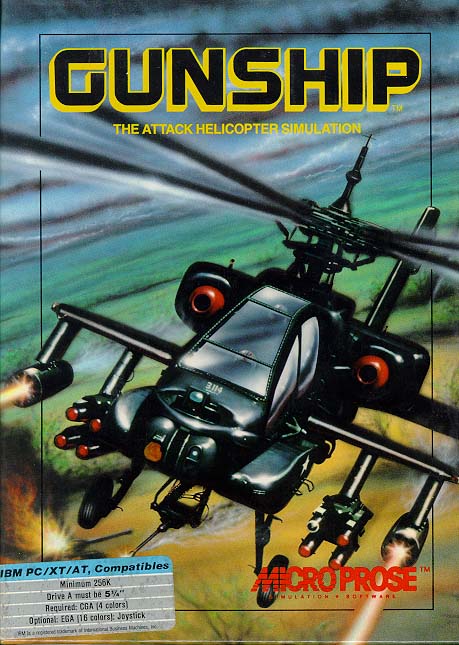
From there I ended up running away with my first love to Philadelphia and then to Baltimore where I got my first job working at M.U.S.E. I helped program (and draw art for) the educational game 'Leaps and Bounds' with Silas Warner as the lead programmer and then moved on to work at Microprose where I worked on Gunship for the Commodore 64, IBM PC, Atari ST and Amiga as well as animation tools for Pirates and Red Storm Rising, compression for Conflict in Vietnam and a few gauges for F-19 Stealth Fighter.
 I was getting anxious to start our company that we had hoped to start in
high−school so in early 88 I came back to So.Cal with the intent of
starting a company with John and Greg who were still at UCLA. John and I worked
on a port of 'Street Sports Basketball' from the Commodore 64 to the Amiga for
Epyx. John and his girlfriend Diana (now wife) did most of the art and John
also wrote a 6502 to 68000 translator in a language called ICON that he learned
at UCLA.
I was getting anxious to start our company that we had hoped to start in
high−school so in early 88 I came back to So.Cal with the intent of
starting a company with John and Greg who were still at UCLA. John and I worked
on a port of 'Street Sports Basketball' from the Commodore 64 to the Amiga for
Epyx. John and his girlfriend Diana (now wife) did most of the art and John
also wrote a 6502 to 68000 translator in a language called ICON that he learned
at UCLA.
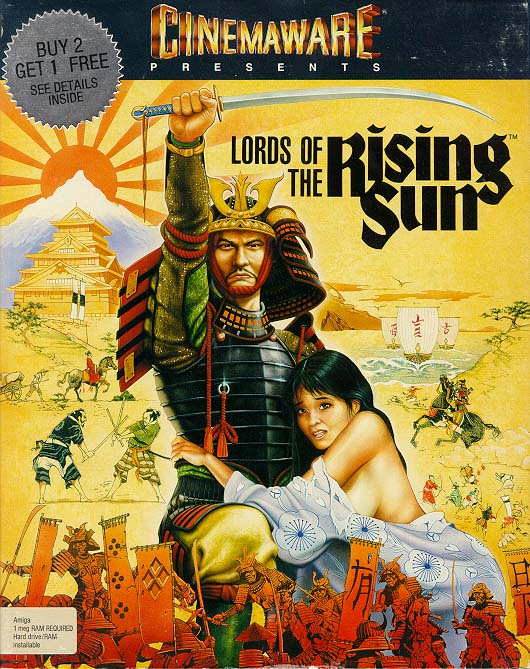
In September I was offered a ton of money (at least it seemed like a ton at the time) to work at a company called 'Cinemaware.' The sad thing was that the day I started some friends of mine that also worked there took me out to lunch and told me they were all quitting very soon because they didn't like the place. I was supposed to work on 'TV Sports Football' for the IBM, a port of the Amiga version, but the Amiga version was not finished and so I was told to help out on 'Lords of the Rising Sun' for the Amiga which was also behind. I worked on a lot of the glue and I programmed the battle sequence.
 That was no fun because since the product was already far behind at the time I
started on it the lead programmer requested that I work with him from 4pm to
10am. I did get to see it snow one night in So.Cal but it was all gone before
daylight.
That was no fun because since the product was already far behind at the time I
started on it the lead programmer requested that I work with him from 4pm to
10am. I did get to see it snow one night in So.Cal but it was all gone before
daylight.
Soon after I started, my friends that said they were going to leave did in fact leave and started a company called Atomic Entertainment and then renamed Aftershock. They got three contracts from Activision and they asked me if I would be interested in getting a fourth contract with their help. It sounded like a great idea so I quit Cinemaware and started on a game for Activision. Aftershock's games were really technically advanced for their time. They had 256 color, full screen 60hz scrolling levels on a 368pc back when most games were EGA. They were arguably several years before their time. Unfortunately, that was just a few months before Activision declared bankruptcy and cancelled something like 40 projects.
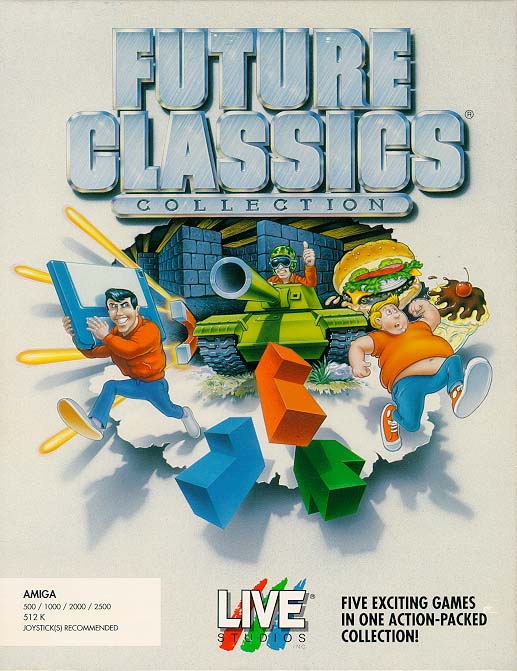
Around then John and Greg had recently finished up at UCLA and were ready to start game programming so they got a contract to do a game and I ended up helping out. The game was 'Future Classics', a collection of five small but fun games.
 Actually I think only 1 of them, Diskman, was fun, but we felt like we were on
the way to starting our own company. One of the things that came out of
developing Future Classics was tUME. Unfortunately the contract was vastly under funded and by the end of it I had
maxxed out my credit cards paying rent and things like that. Sooo, I applied
and got a job at Virgin Mastertronic to program Caesar's Palace on the Gameboy
but I was quickly asked to do some minor work on 'Spot' and was then made Lead
Programmer on 'M.C Kids' for the NES.
Actually I think only 1 of them, Diskman, was fun, but we felt like we were on
the way to starting our own company. One of the things that came out of
developing Future Classics was tUME. Unfortunately the contract was vastly under funded and by the end of it I had
maxxed out my credit cards paying rent and things like that. Sooo, I applied
and got a job at Virgin Mastertronic to program Caesar's Palace on the Gameboy
but I was quickly asked to do some minor work on 'Spot' and was then made Lead
Programmer on 'M.C Kids' for the NES.
 After M.C Kids, John ended up getting a job at Virgin too and I was pretty excited to be able
to work with him again but then there was a run in with the infamous bad
management at Virgin and so I was freelancing again. My next project was 'Terminator vs. Robocop'
for the NES for Interplay which as far as I know was never released. The artwork and design were
horrible. Near the end of that project I was asked to write MyPaint for the
Sega CD.
After M.C Kids, John ended up getting a job at Virgin too and I was pretty excited to be able
to work with him again but then there was a run in with the infamous bad
management at Virgin and so I was freelancing again. My next project was 'Terminator vs. Robocop'
for the NES for Interplay which as far as I know was never released. The artwork and design were
horrible. Near the end of that project I was asked to write MyPaint for the
Sega CD.
 It started on March 15th and the publisher wanted it finished by June 1st but
they didn't deliver the sound and graphics until October 20th so needless to
say the project was late and then even later because by that time I had been
recruited by my friend Lyle Hall to work at a new company called Crystal Dynamics that was started solely to create titles for the new 32bit systems which at
that time only consisted of the 3DO. I was Lead Programmer on Gex but Crystal was under some major time crunches to get 'Crash n Burn' and
'Total Eclipse' shipped so I helped a little with those before putting my full
time into Gex.
It started on March 15th and the publisher wanted it finished by June 1st but
they didn't deliver the sound and graphics until October 20th so needless to
say the project was late and then even later because by that time I had been
recruited by my friend Lyle Hall to work at a new company called Crystal Dynamics that was started solely to create titles for the new 32bit systems which at
that time only consisted of the 3DO. I was Lead Programmer on Gex but Crystal was under some major time crunches to get 'Crash n Burn' and
'Total Eclipse' shipped so I helped a little with those before putting my full
time into Gex.
 Near the end of Gex, John called from Virgin and told me that he and the 3DO Demolition Man team
were considering leaving Virgin because Virgin, in their infinite wisdom, was
going to split them up and put them on separate teams. John wanted to know if I
would consider joining the
m. The answer was YES! This time things looked good because we had 3
programmers and 3 artists and a producer so we'd have a complete team. We
decided to call the company Seven and setup shop in Irvine. We ended up getting a contract with Universal
Interactive Studios to do Disruptor for the M2. Unfortunately the M2 was not ready to develop for and after 7
months of frustration with unfinished development hardware the project was
cancelled.
Near the end of Gex, John called from Virgin and told me that he and the 3DO Demolition Man team
were considering leaving Virgin because Virgin, in their infinite wisdom, was
going to split them up and put them on separate teams. John wanted to know if I
would consider joining the
m. The answer was YES! This time things looked good because we had 3
programmers and 3 artists and a producer so we'd have a complete team. We
decided to call the company Seven and setup shop in Irvine. We ended up getting a contract with Universal
Interactive Studios to do Disruptor for the M2. Unfortunately the M2 was not ready to develop for and after 7
months of frustration with unfinished development hardware the project was
cancelled.
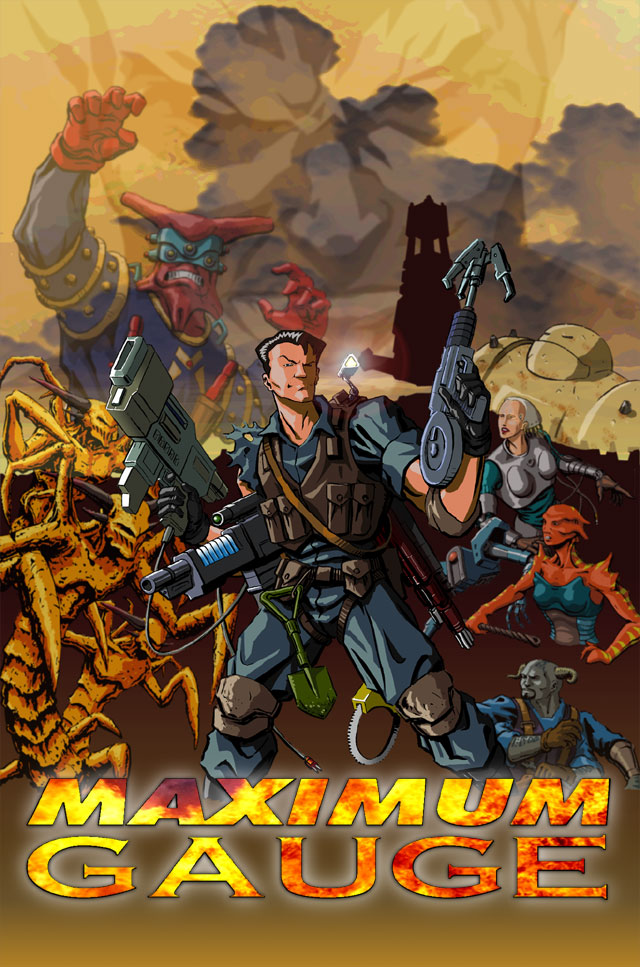 As almost anybody will tell you, a company with 7 partners is a bad idea
because it's very hard to get everybody to agree and with that and some other
conflicts Seven decided the break up. Four of us stuck around and formed our
another company, Big Grub. We had up to 16 people working at our there at it's height. We were making a
2D/3D adventure. The best explanation I can think of is take Diablo but make it
play like Zelda from the Super Nintendo. Unfortunately it didn't work out for
various reasons. See Starting Your Own Game Company for some details.
As almost anybody will tell you, a company with 7 partners is a bad idea
because it's very hard to get everybody to agree and with that and some other
conflicts Seven decided the break up. Four of us stuck around and formed our
another company, Big Grub. We had up to 16 people working at our there at it's height. We were making a
2D/3D adventure. The best explanation I can think of is take Diablo but make it
play like Zelda from the Super Nintendo. Unfortunately it didn't work out for
various reasons. See Starting Your Own Game Company for some details.
So, around Sept 97, after I decided that Big Grub was not going to work for me I thought about what I wanted to do next. Two companies that were in the area were a little interesting, Shiny Entertainment because my friend Tom Tanaka worked there and Naughty Dog because they were making the hit series Crash Bandicoot. At the time though I was studying Japanese so I thought about it and decided, what the heck. I was 33 and no responsibilities (ie, no girlfriend and no family) so I thought I should go to Japan to study Japanese for real. Of course I would need a job. I talked to my friend Mark Cerny who had worked in Japan at Sega for 3 years. He said he was traveling to Japan in December to promote Crash 2 and that I should go with him and he'd introduce me to Sega.
So, I studied my ass off even more for the next 2 months, 2 2 hour classes at OCC, 3 2 hour classes at Berlitz and r sessions of 2 hours of practice a week with Japanese speaking friends plus homework until I went met up with Mark in Japan in mid December 97. I got accepted to AM1, makers of House of the Dead, The Harley Davidson Game, and I think home to all the Sega Print Club machines. I was supposed to start Feb 1st, 1998
 I sold most of my possessions, my car, I got rid of my apartment but as Feb 1st
came by my work visa didn't arrive. I was without a car and without a place to
live. I ended up living at the Big Grub offices for 4 months. During that time
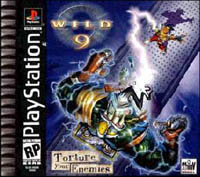
I found out that Wild 9 was in desperate need of some help to meet some
deadlines and was hired under contract to help meet those deadlines. My visa
came in mid March but Shiny begged me to stay until E3 which was near the end
of May. I agreed and left for Japan May 27th, 1997.
I sold most of my possessions, my car, I got rid of my apartment but as Feb 1st
came by my work visa didn't arrive. I was without a car and without a place to
live. I ended up living at the Big Grub offices for 4 months. During that time
I found out that Wild 9 was in desperate need of some help to meet some
deadlines and was hired under contract to help meet those deadlines. My visa
came in mid March but Shiny begged me to stay until E3 which was near the end
of May. I agreed and left for Japan May 27th, 1997.
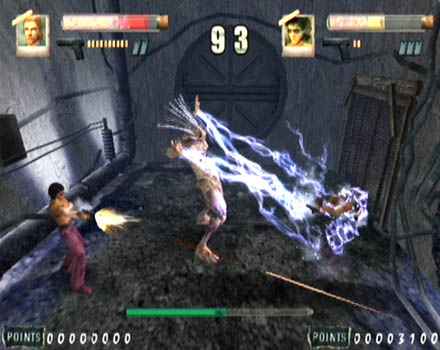
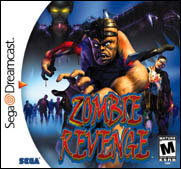 Arriving in Japan I started a Sega of Japan on June 1st and was put on the Zombie Revenge team for the Naomi Arcade
System. I was also asked to write tools/plugins for 3D Studio Max, Lightwave and Alias/Poweranimator to convert from those programs to the Sega development libraries.
Arriving in Japan I started a Sega of Japan on June 1st and was put on the Zombie Revenge team for the Naomi Arcade
System. I was also asked to write tools/plugins for 3D Studio Max, Lightwave and Alias/Poweranimator to convert from those programs to the Sega development libraries.
Unfortunately even though I had studied Japanese for almost 2 years my language skills really weren't that good. Fortunately Sega put me on the team with a English speaking team member, Ando Takeshi. If it wasn't for him I would never have survived. Still, I asked him to try not to use any English if possible and for the first few months, most of my communication with the team was through pictures. They'd draw what they wanted and I'd make it.
Being a programmer is not a great way to learn a foreign language because it's generally a solitary endeavor. Once something was explained I could go off and not really need to talk to anybody for a couple of days. On top of which if I did need to talk to somebody it was generally highly technical so generally I didn't communicate much.
 This is a common thing I'm told but many people moving to a foreign country
after about 6 months get really depressed about being in a foreign country. I
was no exception. Not able to communicate well I didn't really feel like I had
any real friends and I also didn't feel I was really contributing to the team
as much as I would have liked.
This is a common thing I'm told but many people moving to a foreign country
after about 6 months get really depressed about being in a foreign country. I
was no exception. Not able to communicate well I didn't really feel like I had
any real friends and I also didn't feel I was really contributing to the team
as much as I would have liked.
Well, around that time a friend of mine, Evan Wells, tempted me by telling me about an opportunity to work at Naughty Dog on a PS2 project. PS2 had all the hype and it was pretty tempting. My original plan was to stay in Japan for 3 years. That's what I had told myself and Sega. But, the deal at Naughty Dog was arguably something I couldn't turn down. It took me about 2.5 months to decide but I finally decided to work at Naughty Dog.
The sad thing is, about 3 weeks after that (1) my project at Sega finished, (2) that meant lots more free time for friends (3) my language skills got better. Basically I started having a great time but I had already made all the plans to leave so I came back to the U.S. on March 8th, 1999
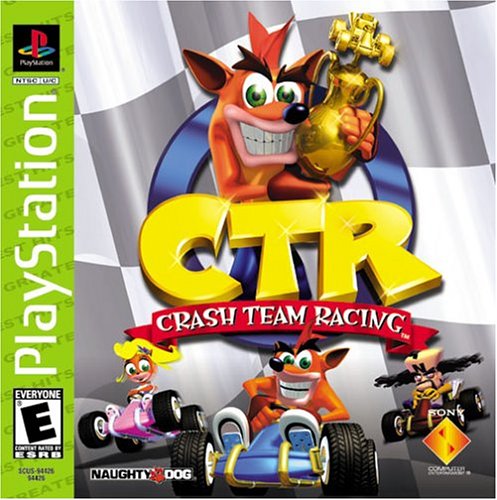 At Naughty Dog I was asked to work on CTR:Crash Team Racing. This is probably the funnest
game I've worked on. This or M.C. Kids. The thing that makes CTR so fun is
multiplayer mode. The whole office was pretty much always playing the game.
That's fairly unusual. Most games, even if they are fun you get tired of
playing every day but not CTR. Of course the game is a kart game so it's got
lots in common with other kart games but there are several touches we were very
proud of. To name a few, the tires look pretty cool. Check em out. The textures
on the track almost never res−out (ie, turn blocky) This is something I'm
not sure most people notice and alot of work went into it but I think people
did notice it looks good. The turbo system is very cool and combined with the
shortcuts it can be really fun. I think the favorite shortcut in the game is on
the snow level if you are doing well and you get your turbos in the right
places you can jump the river but if you are off even slightly you fall in the
river and it's a pretty big penalty. If feels REALLY GOOD when you make it! CTR
was very well received. Check out some of the reviews.
At Naughty Dog I was asked to work on CTR:Crash Team Racing. This is probably the funnest
game I've worked on. This or M.C. Kids. The thing that makes CTR so fun is
multiplayer mode. The whole office was pretty much always playing the game.
That's fairly unusual. Most games, even if they are fun you get tired of
playing every day but not CTR. Of course the game is a kart game so it's got
lots in common with other kart games but there are several touches we were very
proud of. To name a few, the tires look pretty cool. Check em out. The textures
on the track almost never res−out (ie, turn blocky) This is something I'm
not sure most people notice and alot of work went into it but I think people
did notice it looks good. The turbo system is very cool and combined with the
shortcuts it can be really fun. I think the favorite shortcut in the game is on
the snow level if you are doing well and you get your turbos in the right
places you can jump the river but if you are off even slightly you fall in the
river and it's a pretty big penalty. If feels REALLY GOOD when you make it! CTR
was very well received. Check out some of the reviews.
There are lots of nice touches. For example if you race Time Trial and you get a certain time it unlocks a pre−recorded "ghost" of one of the characters racing so you can try to beat his time. If you beat him then another even harder "ghost" character appears. This ghost is an actual recording of the best race of one of the two designers of the game. They are pretty darn good so if you can beat them you're really good.
 After that I started working on a PS2 game at Naughty Dog but around June I
decided that I just couldn't take the stress anymore. Naughty Dog is a very
high stress environment. At least 2 others before me left for
the same reason although they left calmly. I left by blowing up. 😞
After that I started working on a PS2 game at Naughty Dog but around June I
decided that I just couldn't take the stress anymore. Naughty Dog is a very
high stress environment. At least 2 others before me left for
the same reason although they left calmly. I left by blowing up. 😞
So, after that I decide to come back to Japan and continue studying. The first time, when I worked at Sega I worked 10am to 11:30pm 5 days a week with an hour and 20 minute commute. That's 8:40 am to 12:50 am. It was pretty hard to get any real studying done that way. This time I came here without a job which enabled me to study fulltime.
I studied fulltime for 19 months or until I ran out of money at which point I went back to Sega. I decided to stay in Japan even though the pay is bad because I still didn't feel my Japanese was close to fluent. I was in the same group as before but their name had changed temporarily to Wow Entertainment.
It didn't work out though. First they put me on a Gamecube game only to decide they were not going to make any GameCube games a month later and cancelling the project. They then told me I would be on the House of the Dead 4 team but the House of the Dead team was still making House of the Dead 3 and had 3 or 4 months to go. Next they put me on the Shinsengumi team. You may notice Sega never released a Shinsengumi game. Basically they had a deal with a famous manga company that was supposed to supply both the art and the design. Not having any design sense for games there was never any progress.
So, instead I took it on myself and re−wrote their 3d tool chain and the libraries to use them. Before that all artwork had to go through a programmer to make it into the game. Their tools would convert the graphics to C source. They'd run the C source through a compiler to turn it into runtime data and compile it into the code. Every piece had to be separately exported, models, animations, cameras. Levels were generally built by hand typing positions by hand into C++. I got rid of all of that and changed it to a western style system that would let artists and designers make graphics, characters, cutscenes and levels all without a programmer.
But, having never been officially on a team and doing that entire system basically on my own I wasn't getting any Japanese practice and I was getting paid poorly so I figured I was just wasting my time and decided to quit and go back to the USA.
Around that time the chance to pitch a game to Sony of Japan came up and I spent 4 months on that instead of going back. At the end I was pretty broke and needed a job ASAP. Although I was looking in the USA I applied to a few local companies because I really needed something ASAP or I would have started not being able to pay the rent. Sony of Japan contacted me and even though it didn't pay well it seemed like a good opportunity and I really needed the job so I took it.
At first I was on a new PS3 team as one of only 3 people on the team. The programmer (me), an artist and the producer. We pitched ideas to upper management for 18 months but none ever got approved. During this time I had made friends with Kouno−san and he had managed to get LocoRoco approved.
 With 18 months of my life basically gone to pitches and no project in sight I
asked to be switched to the LocoRoco team which is the last game I shipped.
LocoRoco is so far the game I'm most proud of. It's super fun and it was a
small team. For the first 6 months there were only 3 programmers and over the
entire project there were effectively only 4. That means even though it's a
typical 32bit game with all the pieces a 32bit game needs the 4 of us wrote it
ourselves completely from scratch in a year including amazing tools, an amazing
environment and we made an amazing game. It feels really good to have done so
well with such a small team.
With 18 months of my life basically gone to pitches and no project in sight I
asked to be switched to the LocoRoco team which is the last game I shipped.
LocoRoco is so far the game I'm most proud of. It's super fun and it was a
small team. For the first 6 months there were only 3 programmers and over the
entire project there were effectively only 4. That means even though it's a
typical 32bit game with all the pieces a 32bit game needs the 4 of us wrote it
ourselves completely from scratch in a year including amazing tools, an amazing
environment and we made an amazing game. It feels really good to have done so
well with such a small team.
